Web cookies (also called HTTP cookies, browser cookies, or simply cookies) are small pieces of data that websites store on your device (computer, phone, etc.) through your web browser. They are used to remember information about you and your interactions with the site.
Purpose of Cookies:
Session Management:
Keeping you logged in
Remembering items in a shopping cart
Saving language or theme preferences
Personalization:
Tailoring content or ads based on your previous activity
Tracking & Analytics:
Monitoring browsing behavior for analytics or marketing purposes
Types of Cookies:
Session Cookies:
Temporary; deleted when you close your browser
Used for things like keeping you logged in during a single session
Persistent Cookies:
Stored on your device until they expire or are manually deleted
Used for remembering login credentials, settings, etc.
First-Party Cookies:
Set by the website you're visiting directly
Third-Party Cookies:
Set by other domains (usually advertisers) embedded in the website
Commonly used for tracking across multiple sites
Authentication cookies are a special type of web cookie used to identify and verify a user after they log in to a website or web application.
What They Do:
Once you log in to a site, the server creates an authentication cookie and sends it to your browser. This cookie:
Proves to the website that you're logged in
Prevents you from having to log in again on every page you visit
Can persist across sessions if you select "Remember me"
What's Inside an Authentication Cookie?
Typically, it contains:
A unique session ID (not your actual password)
Optional metadata (e.g., expiration time, security flags)
Analytics cookies are cookies used to collect data about how visitors interact with a website. Their primary purpose is to help website owners understand and improve user experience by analyzing things like:
How users navigate the site
Which pages are most/least visited
How long users stay on each page
What device, browser, or location the user is from
What They Track:
Some examples of data analytics cookies may collect:
Page views and time spent on pages
Click paths (how users move from page to page)
Bounce rate (users who leave without interacting)
User demographics (location, language, device)
Referring websites (how users arrived at the site)
Here’s how you can disable cookies in common browsers:
1. Google Chrome
Open Chrome and click the three vertical dots in the top-right corner.
Go to Settings > Privacy and security > Cookies and other site data.
Choose your preferred option:
Block all cookies (not recommended, can break most websites).
Block third-party cookies (can block ads and tracking cookies).
2. Mozilla Firefox
Open Firefox and click the three horizontal lines in the top-right corner.
Go to Settings > Privacy & Security.
Under the Enhanced Tracking Protection section, choose Strict to block most cookies or Custom to manually choose which cookies to block.
3. Safari
Open Safari and click Safari in the top-left corner of the screen.
Go to Preferences > Privacy.
Check Block all cookies to stop all cookies, or select options to block third-party cookies.
4. Microsoft Edge
Open Edge and click the three horizontal dots in the top-right corner.
Go to Settings > Privacy, search, and services > Cookies and site permissions.
Select your cookie settings from there, including blocking all cookies or blocking third-party cookies.
5. On Mobile (iOS/Android)
For Safari on iOS: Go to Settings > Safari > Privacy & Security > Block All Cookies.
For Chrome on Android: Open the app, tap the three dots, go to Settings > Privacy and security > Cookies.
Be Aware:
Disabling cookies can make your online experience more difficult. Some websites may not load properly, or you may be logged out frequently. Also, certain features may not work as expected.
Fifteen current and former UConn students have received Graduate Research Fellowships from the National Science Foundation. UConn’s recipients include three members of the senior class of 2026, four graduate students, and eight recent alumni. In addition to these 15 students, one participant in UConn’s NSF-funded Research and Mentoring for Postbaccalaureates Program (RaMP) also received an award. You can read more about it in UConn Today.
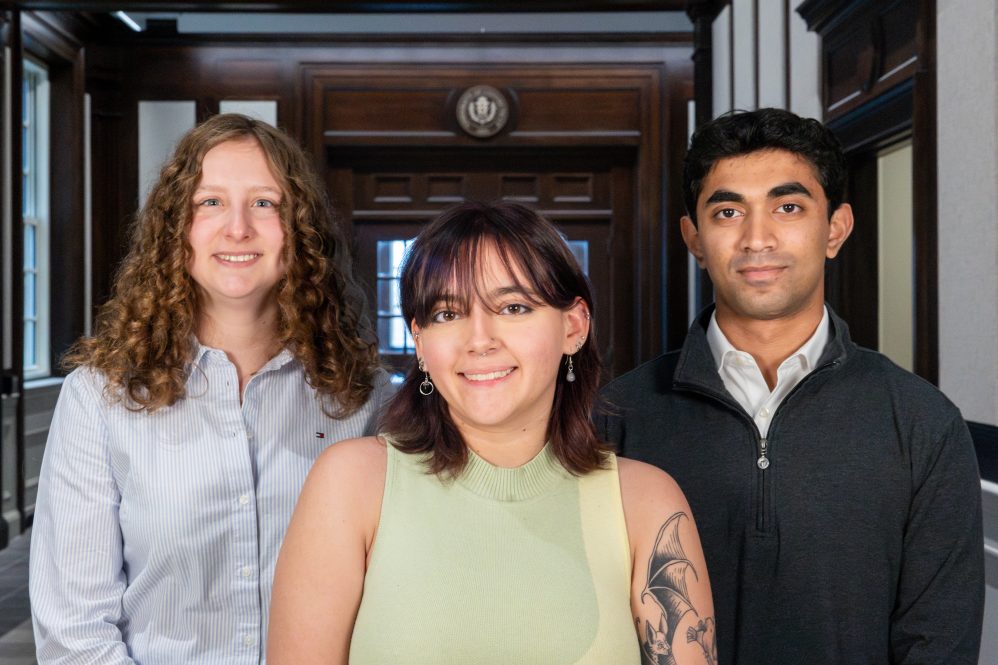
Three University of Connecticut undergraduate students have been named Goldwater Scholars for the current year. The Goldwater Scholarship is considered the nation’s premier scholarship for undergraduates studying math, natural sciences, and engineering. The three students are: Daniel D’Souza ’28 (CLAS) of Cheshire; Ashly Gasior ’27 (CLAS) of Seekonk, Massachusetts; and Mackenzie Robillard ’27 (CLAS) of Goshen. All three are enrolled in the College of Liberal Arts and Sciences and are in the Honors Program. Please see the UConn Today article for more information.
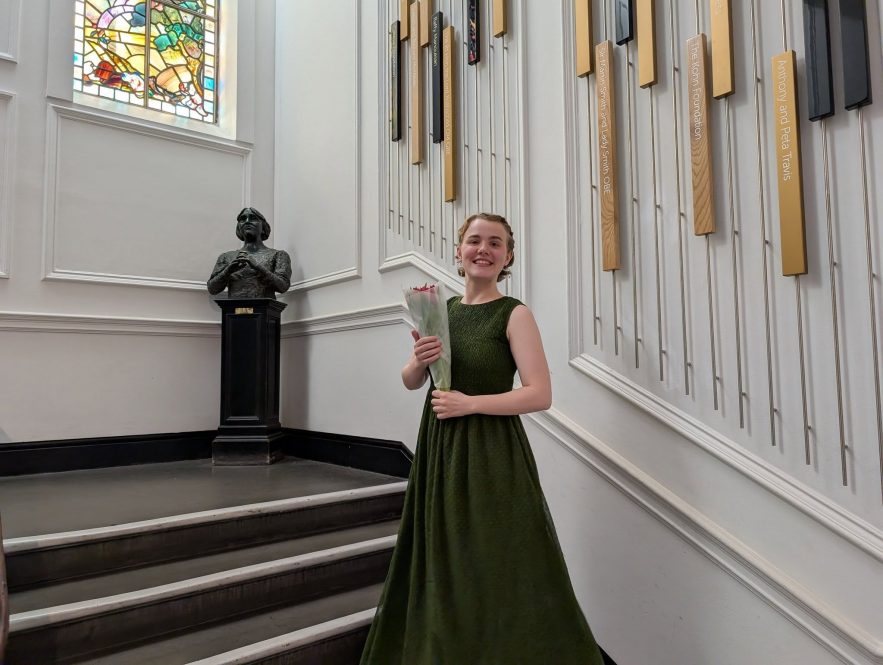
UConn graduate Sarah Marze ’23 (SFA) recently returned to Connecticut after spending the past two years at the Royal Academy of Music in London as a Marshall Scholar.
“I am grateful to have spent my two years collaborating with some of the best classical musicians in the world,” says Marze. “Now that I am back home, I am eager to share what I’ve learned and put into practice the new philosophies, aesthetics, and dreams I’ve encountered during my Marshall Scholarship.”
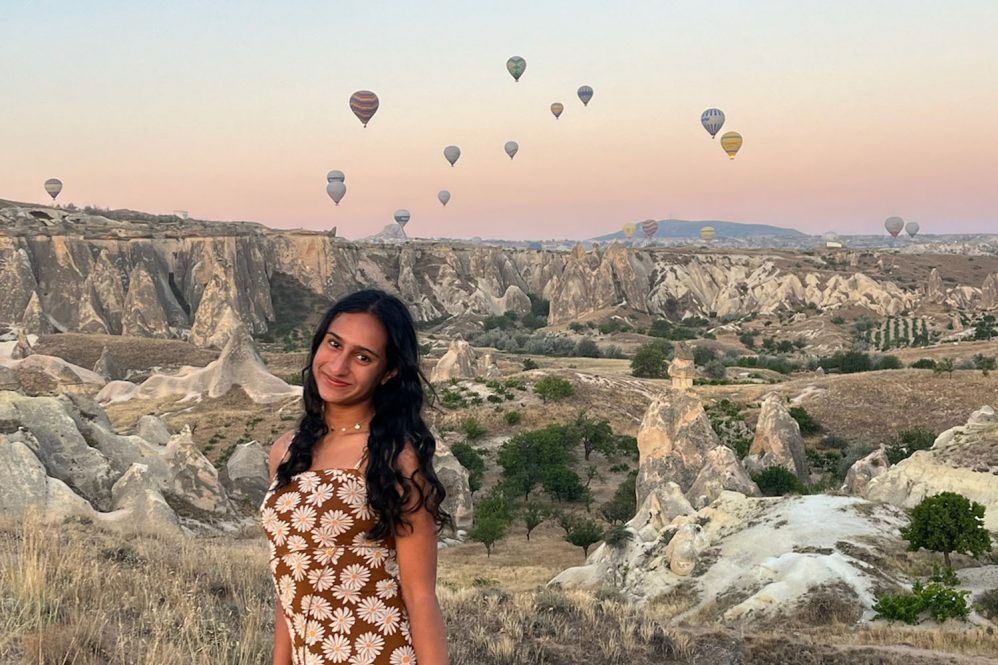
Hope Chokshi ’28 (CLAS) spent two months this summer studying in Turkey as part of the Critical Language Scholarship (CLS) Program through the U.S. Department of State. Chokshi is a native of Avon and is pursuing a dual degree in classics and molecular and cell biology. She studied at the Turkish and Foreign Languages Research and Application Center (TOMER) of Ankara University, in Turkey’s capital city. “I learned a lot about the culture of Turkey and actually did pick up a lot of the language,” says Chokshi. You can read all about it in UConn Today.
Six recent UConn graduates were selected as finalists for the Fulbright U.S. Student Program. The program provides grants for individually designed study and research projects or for English teaching assistantships around the world. Students meet, work, live with, and learn from people in the host country, sharing daily experiences.
Julian Cote-Dorado ’24 (CLAS) has been accepted into the Congress-Bundestag Youth Exchange (CBYX) for Young Professionals for the 2025-26 academic year. The fellowship annually provides 65 American and 65 German young professionals the opportunity to spend one year in each other’s countries, studying, interning, and living with hosts as part of a cultural immersion program. You can read all about it in UConn Today.
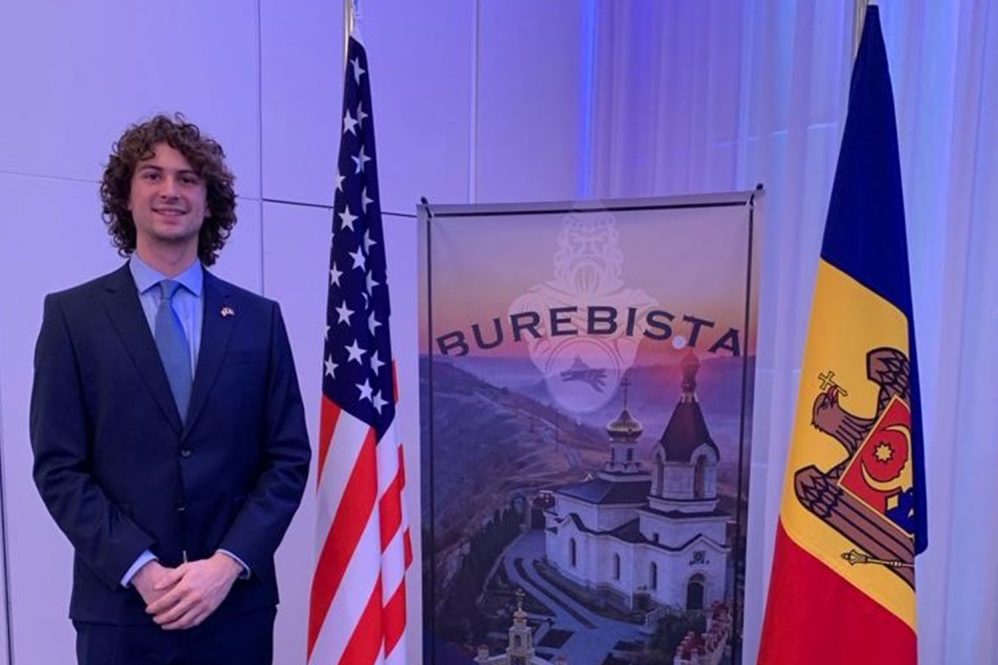
A record-breaking 31 UConn students have been awarded aGilman Scholarshipin the latest cohort of the prestigious academic award. The award is congressionally funded through the Bureau of Education and Cultural Affairs at the State Department.
The funding supports expanding student participation in study abroad programs and encourages travel to diverse locations around the globe, along with intensive language study and internship experiences.
The 31 UConn students, who will study in 14 different countries, will receive a total of nearly $94,000 in scholarship funds through the Gilman program. A total of 40 UConn students have earned Gilman awards in the last two cohorts, this one and October 2024, for a total of more than $121,500 in scholarship funding.
Students applying for Gilman Scholarships work with advisors in UConn’s Office of National Scholarships & Fellowships (ONSF) and Experiential Global Learning (EGL). Rachel Gleicher, an advisor in EGL, and Michael Cunningham, assistant director of ONSF and UConn’s Fulbright program advisor, are UConn’s two Gilman certifying advisors.
“We are very excited that the Gilman program has selected so many UConn students this cycle,” says Cunningham. “It’s a testament to the quality of our students and to the hard work that they put into their applications.”
The program recognizes and supports outstanding students in NSF-supported disciplines who are pursuing research-based master’s and doctoral degrees at accredited institutions in the United States
Three students with ties to the University of Connecticut have recently earned National Science Foundation Graduate Research Fellowships (NSF-GRFP). The trio includes one current graduate student and two recent alumni, one of whom is currently enrolled in UConn’s Research and Mentoring for Postbaccalaureates Program (RaMP).
The oldest graduate fellowship of its kind, the NSF-GRFP was first awarded in 1952. The program recognizes and supports outstanding students in NSF-supported disciplines who are pursuing research-based master’s and doctoral degrees at accredited institutions in the United States. In addition to a three-year annual stipend of $37,000, plus another $16,000 paid to the student’s home institution, fellows have access to a wide range of professional development opportunities over the course of their graduate careers.
Andy Zhang ’26 (CLAS, CAHNR) has been selected as aKey into Public Service Scholarby the Phi Beta Kappa Society, the nation’s oldest academic honor society and a leading national advocate for the value of liberal arts and sciences education.
The program annually recognizes 20 exceptional arts and sciences students with a demonstrated interest in pursuing careers in local, state, and federal government. This year, over 800 students applied for the honor.
Zhang, an economics and environmental sciences major, will receive a $5,000 scholarship and will participate in a Washington, D.C., conference providing training, mentorship, and opportunities for reflection on pathways to active citizenship.
“This award perfectly aligns with a lot of my interests given that it has a strong focus on liberal arts, public service, and natural sciences,” says Zhang, who was inducted into UConn’s chapter of Phi Beta Kappa as a junior. “It is a wonderful opportunity as I look towards my future.”
Caitlin Noonan ’26 (ENG) is a 2025 Goldwater Scholar (Sydney Herdle/UConn Photo)
University of Connecticut junior Caitlin Noonan ’26 (ENG), a chemical engineering major, has been named a 2025 Goldwater Scholar. The Goldwater Scholarship is considered the nation’s premier scholarship for undergraduates studying math, natural sciences, and engineering. Schools can nominate a maximum of four students per year, and Noonan is among just 441 students selected nationally for the award this year from a pool of more than 5,000 applicants.